Freedom, Free Will, and the Paradox of Choice
Jul 09, 2021
Last updated: September 3, 2026
Americans celebrate their freedom on July 4th, whereas Indians celebrate their freedom from British Rule with an August 15th Independence Day. A quick web search of National Independence Day reveals a long list of countries that celebrate their freedom from some form of prior government or oppression.
The dictionary defines freedom as the state of not being imprisoned or enslaved, but it is also:
The power or right to act, speak or think as one wants.
How Free are You?
Reflect, for a moment, on your own freedom to act, speak, or think as you want.
You were not free to choose the time and place of your birth. You were not free to choose your parents, their economic status, religious leanings, political affiliation, or educational background. You had little or no freedom in where you went to school and the ideology of your teachers.
We all imagine we have free will, but so many of our choices and decisions are influenced by things we have no control over and are unaware of.
Nationality, Gender, DNA, political and religious views are, for the most part, an 'accident of birth'. I say for the most part because when we pay attention to these things, we can set an intention, to act to behave differently from our pre-programming.
Psychologists and neuroscientists now believe that free will doesn't actually exist, but there is a paradox: ideas and intentions do matter.
The Paradox of Freedom
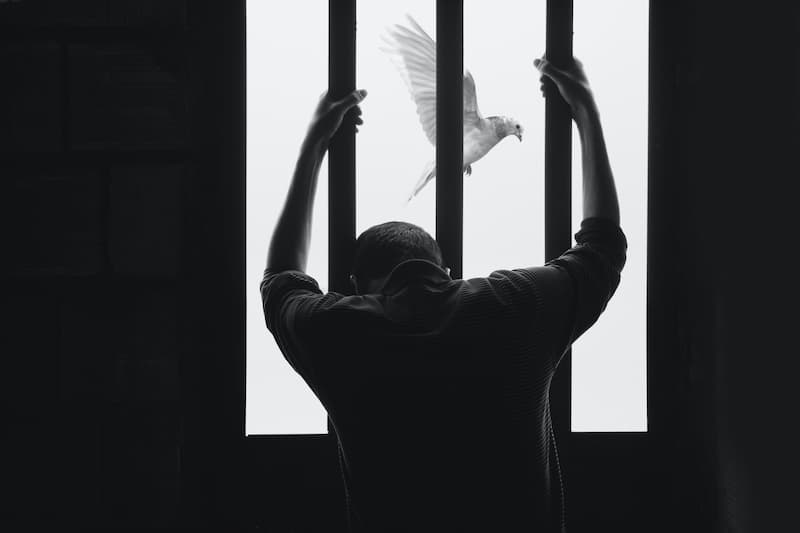
Lack of freedom can be both visible, such as being imprisoned, and invisible, such as being locked into a limiting belief or bias.
Dr. Viktor Frankl, who was imprisoned by the Nazis as a Jew, observed that the last of all freedoms is to choose our own attitude.
Choosing your attitude is an expression of self-leadership. The definition of self-leadership is:
The practice of intentionally influencing your thinking, feeling, and actions towards your objectives. (Bryant and Kazan 2012)
Regardless of whether you live in a democratic or authoritarian culture, because of your upbringing and early influences, it takes a high level of self-awareness to be really free. With that freedom, paradoxically, comes a level of responsibility.
Self-leadership gives us autonomy, but not freedom from consequences. Consequences to our health and our environment.
It has been my mission to wake people up to the responsibility to live with freedom, freedom of the mind and body, and to live with self-leadership, and that means choosing your narrative.
As Lao Tzu said,
"Mastering others is strength; mastering oneself is true power"
And Plato remarked:
"The first and best victory is to conquer self"
The Narrative of Freedom and Personal Power
When you listen to anyone who has mastered self-leadership and achieved freedom, you will hear a story of challenge that leads to a deeper understanding and a new way of being.
If you have come across the work of mythologist Joseph Campbell, you will know that this is the prototypical story arc. The hero of the story is challenged to undertake a quest, but at first, he refuses. The hero is called again, but this time he is mentored and supported by friends who travel with him. Eventually, the hero, or heroine, faces their external and internal demons and returns to the world with new wisdom.
This is fundamentally the human experience, and it helps to realize where you are in the journey and to know that you can change the narrative.
When you have a new idea and set a new intention, you change the causal chain and alter the outcomes of a situation. Even if everything in your life up to this point has been programmed, the moment you recognize this, have an idea, and set an intention, you are exercising the freedom to change your future.
What will your next chapter be?
Your Future Self
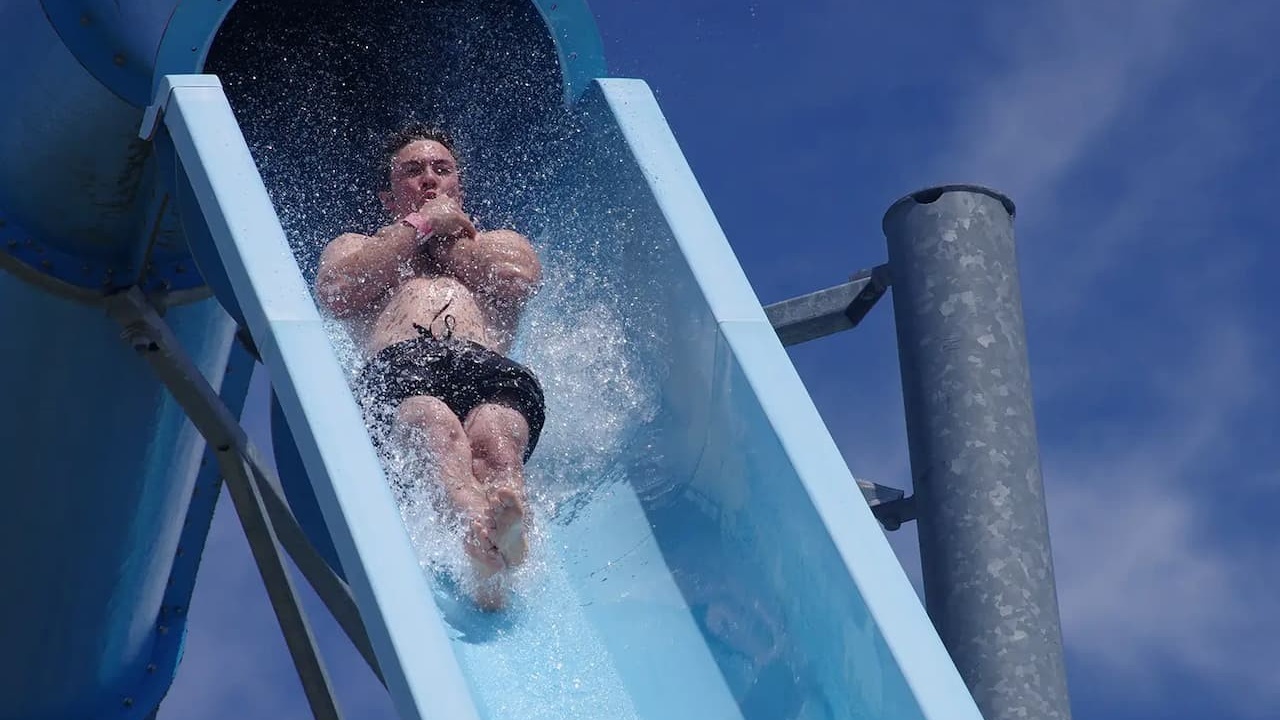
Imagine being on a big waterslide at a theme park. Your descent to the bottom is inevitable, due to gravity, the flow of water, and the design of the slide. What is within your control is how you view the experience. Is it fun, or frightening? Are you learning and experimenting, or rigid and inflexible?
Now imagine your brain as a cascade of neurons firing rapidly. The pattern of connections is influenced by your genetics, your conditioning, and your physiology. Just like the waterslide, in each moment of life, your brain is giving you an experience. This experience is yours to choose how to enjoy, but ultimately governed by physics.
As you pay attention to your experience, your awareness increases, and with awareness comes ideas. Ideas matter, because they don't just result from experience; they become part of the cascade of neurological connections that generate your next experience. Your future self is shaped by which ideas you choose to reinforce today.
My friend and colleague, Dr. Paul Englert, explores this in his book, Futureselves, Free Will, the Self, and the Science of Living Well. Futureselves are the visions we hold for ourselves ahead of us, and those visions turn out to be central to understanding human behavior and to exercising whatever freedom we actually have.
Wake UP!
My mission is to wake my audiences up to take ownership of their lives; to be the driver and not the passenger. If you are interested in learning more about my work as a leadership speaker or executive coach, feel free to contact me.
Frequently Asked Questions
What is the paradox of freedom?
The paradox is that most of what shapes your choices, your nationality, upbringing, genetics, and early conditioning, was never chosen by you, yet ideas and intention still visibly change outcomes. You are less free than it feels, and still freer than doing nothing about it.
What is the free will paradox?
Psychologists and neuroscientists increasingly argue that free will, in the strict sense of an uncaused choice, doesn't exist. The paradox is that even if every choice has a prior cause, the moment you become aware of a pattern and set a new intention, you change the causal chain going forward. Awareness itself becomes a form of freedom.
Do humans really have free will?
Most neuroscientists now doubt that free will exists in an absolute sense: your choices are shaped by genetics, upbringing, and conditioning you never chose. What you do have is the freedom Viktor Frankl described as the last of all freedoms, the freedom to choose your attitude and response once you become aware of the pattern you're in.
What is a person's future self?
Your future self is the version of you shaped by the ideas and intentions you act on today. Since your brain's patterns are influenced by what you pay attention to, deliberately choosing which ideas to reinforce is one of the few genuine levers you have over who you become.
Turn Insight Into ActionReading about leadership can change what you know.Self-leadership changes what you do.Develop your leadership effectiveness → Explore Self-leadership Discover your leadership strengths & gaps → Choose an Executive Coach Unlock the potential of your team → Workshops & Masterclasses Ignite your event or conference → Book Andrew Bryant as your Leadership Speaker "Prescription without diagnosis is malpractice" |