
Self-Leadership: The Foundation of Personal Mastery & Leadership Development
Apr 26, 2026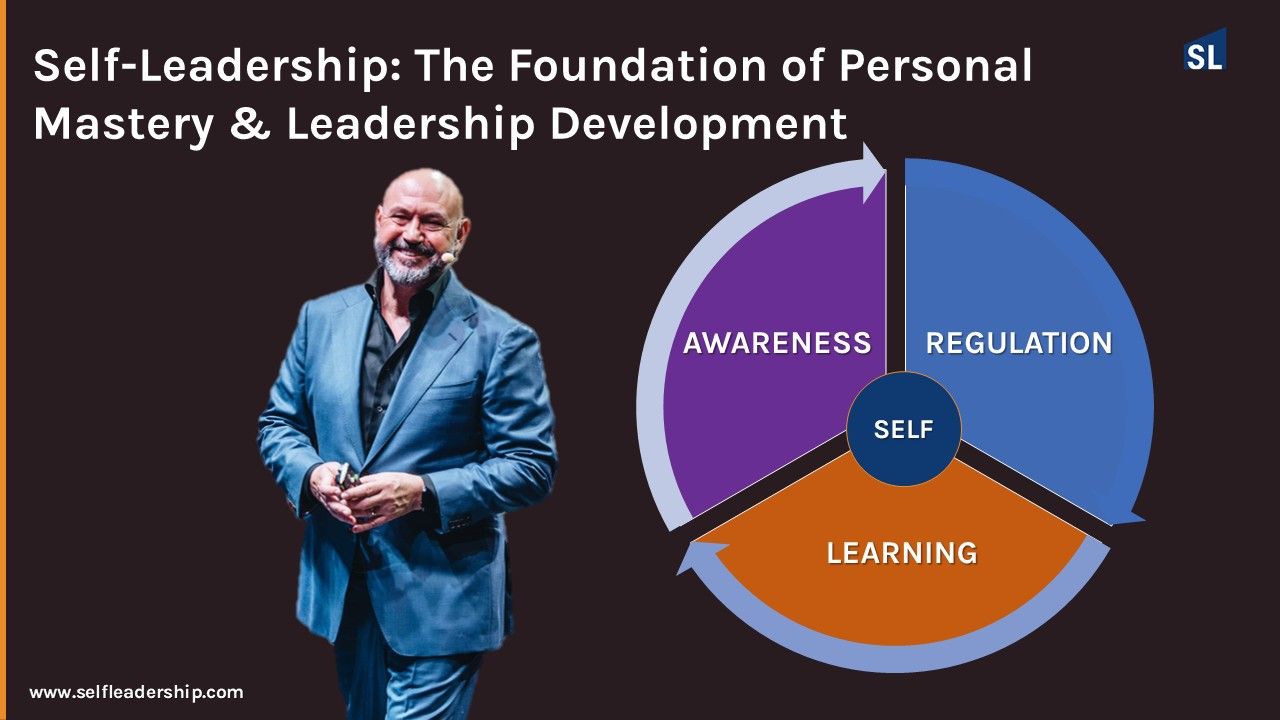
If I had to name the single capability that determines whether a leader thrives in the next decade, it would not be strategic thinking, emotional intelligence, or even the ability to use AI well. It would be self-leadership. Every other capability sits on top of it.
I have spent twenty-five years working with leaders in more than forty countries, from Microsoft and Singapore Airlines to Airbus and Deloitte. The pattern is consistent. Leaders who lead themselves well lead others well. Leaders who do not eventually run aground, no matter how clever their strategy or how charismatic their stage presence.
That is what this post is about. What self-leadership actually is, where it came from, why the research backs it up, and how I have spent my career turning it into a teachable, measurable practice that supports both personal mastery and modern leadership development.
What is self-leadership?
The definition I use, and the one now embedded in academic literature and practitioner training around the world, is straightforward.
Self-leadership is the practice of intentionally influencing your thinking, feeling, and actions towards your objectives. (Bryant & Kazan, 2012)
The word that does most of the work in that sentence is intentionally. Without intention, behavior drifts. With intention, behavior compounds. Self-leadership is not a personality trait. It is not a leadership style. It is a practice, which means it is contextual, developable, and measurable. That distinction matters because it is what makes self-leadership trainable rather than something you either have or you do not.
Self-leadership Researchers
I want to be clear about lineage because I believe in standing on the shoulders of those who came before me.
The term self-leadership was coined by Charles Manz at the University of Massachusetts in 1983. His 1986 paper in the Academy of Management Review introduced self-leadership as an expanded theory of self-influence in organizations. Manz, often working with Henry Sims, Christopher Neck, and others, built the foundation of the field. Their work established the strategy taxonomy that still anchors academic research today: behavior-focused strategies, natural reward strategies, and constructive thought pattern strategies.
Jeffery Houghton and Christopher Neck then turned that theory into a measurement. Their 2002 Revised Self-Leadership Questionnaire, and the 2012 Abbreviated Self-Leadership Questionnaire developed with Dawley and DiLiello, became the field's dominant research instruments. Their work has been validated in cross-cultural samples across the United States, China, Korea, Germany, and beyond.
Albert Bandura's social cognitive theory provides a deeper psychological foundation, particularly through the concept of self-efficacy, which research consistently identifies as the mechanism by which self-leadership influences performance.
These are the giants whose shoulders I stand on. My contribution to the field is grounded in theirs.
My contribution: the three-competency model
Self Leadership: How to Become a More Successful, Efficient, and Effective Leader from the Inside Out, which I co-authored with Dr. Ana Kazan in 2012, published by McGraw-Hill, has been cited in more than two hundred peer-reviewed papers and doctoral dissertations across nursing, education, public administration, consulting, and executive development.
Since the book was published, I introduced a three-competency model which can be used to assess and develop self-leadership-
The three competencies are:
Self-awareness. The capacity to notice and reflect on your own psychological processes, inner experiences, and the effect on others. This is the diagnostic layer. Without it, the other two competencies operate blindly.
Self-learning. The disciplined capacity to diagnose your own development needs, set learning goals, gather resources, and evaluate outcomes. This is what I now call learning velocity. I argue in my new book POTENTIAL-IZE (Wiley, 2026) that this is the decisive competency in the AI age.
Self-regulation. The capacity to modulate your attention, emotion, and behavior in the service of a goal, particularly under pressure.
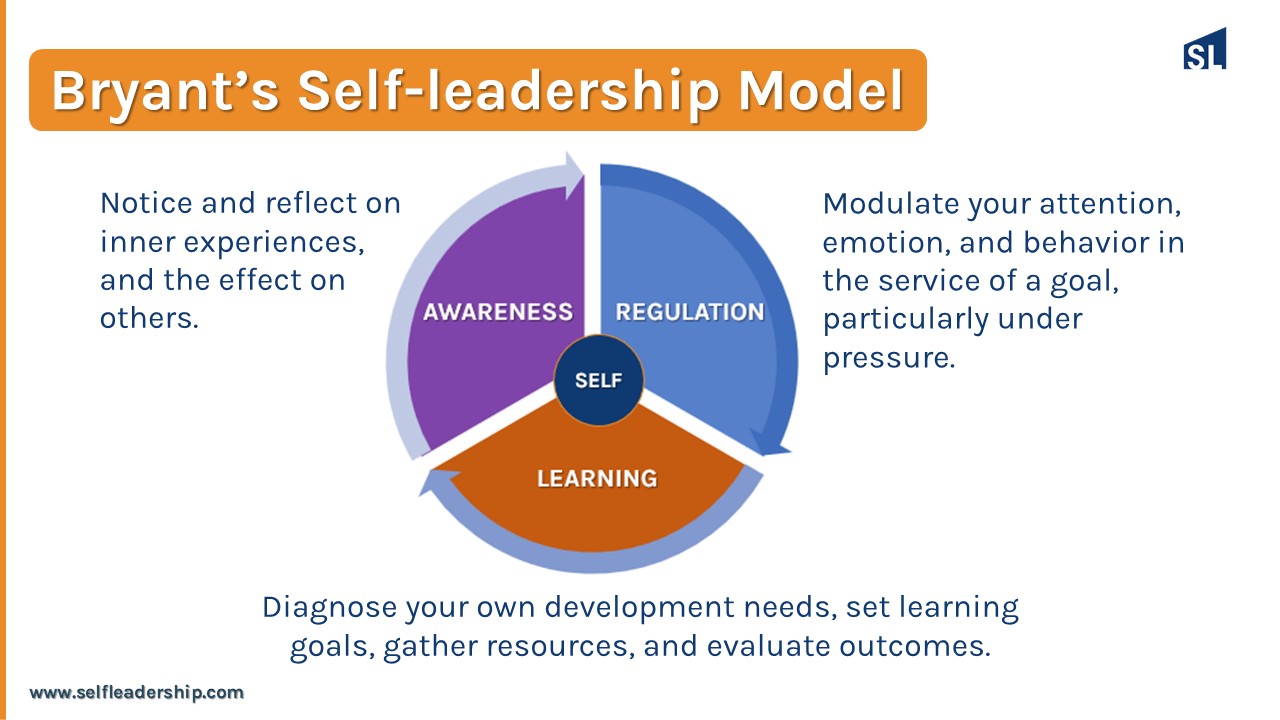
The reason this model has traveled is that it gives practitioners and coaches a developmental architecture, a way of structuring leadership growth over time, that the academic strategy taxonomy on its own does not provide. Strategies are what you do. Competencies are what you become capable of doing well. Development is the bridge between the two.
Why self-leadership is the foundation of personal mastery
Personal mastery, a term made famous by Peter Senge in The Fifth Discipline, is often described as the discipline of personal growth and learning. I would put it more directly. Personal mastery occurs when self-leadership becomes habitual.
Mastery requires three things that self-leadership delivers:
Honest self-knowledge. You cannot improve what you cannot see. The first competency, self-awareness, is the precondition for any meaningful personal change. People who try to develop without it are guessing.
A capacity to learn faster than the world changes. This is the second competency, self-learning. The leaders I have coached over the past decade who have stayed relevant share one trait: they have an unusual ability to recognize what they need to learn, learn it efficiently, and apply it in context. That capacity is more valuable now than at any time in my career.
The discipline to act consistently with your intentions. This is self-regulation. Knowing what to do is easy. Doing it, particularly under pressure, when tired, or when no one is watching, is hard. Self-regulation is the muscle that closes that gap.
When the three competencies operate together, what emerges is not a list of techniques but a way of being. That is what mastery looks like.
Why self-leadership is essential to leadership development
Here is the harder question, and the one I get asked most often. Why does self-leadership matter for leading others, and why is it not enough simply to learn leadership techniques?
The answer is uncomfortable. Most leadership failures are not technical. They are failures of self-leadership. Leaders who cannot regulate their emotions create teams that cannot trust them. Leaders who cannot learn cannot adapt. Leaders without self-awareness create blind spots that ripple outwards through the organization.
Self-leadership is not one capability among many. It is the foundation on which every other leadership capability rests. You cannot build Authentic Leadership, Transformational Leadership, Servant Leadership, or any other leadership model on top of a leader who cannot lead themselves. Forty years of research and twenty-five years of my coaching point to the same conclusion.
This is the argument I make in my keynote speeches and executive masterclasses. Develop self-leadership first. Everything else follows.
How to start developing your self-leadership
I want to leave you with something practical, not an abstract framework. If you are new to this work, here is where I would start.
Diagnose where you are. Take fifteen minutes and ask yourself, honestly, which of the three competencies is your weakest. Do you struggle to notice what you are feeling and projecting? That is self-awareness. Do you struggle to learn from experience or from feedback? That is self-learning. Do you know what you should do, but find yourself not doing it? That is self-regulation. Most people have one of the three that lags behind the others. Start there.
Build one practice. For each competency, pick one practice and run it for thirty days. For self-awareness, journal at the end of each day. For self-learning, set one specific learning goal and track it weekly. For self-regulation, identify one situation in which your behavior does not align with your intention, and design an alternative response.
Get feedback. Self-leadership is not a solo sport. The fastest way to grow is to invite feedback from someone you trust, and to take it seriously when it arrives.
Make it a practice, not a project. This is the one I emphasize most. Self-leadership is not something you complete. It is something you keep developing for the rest of your life. The leaders I most admire treat it as their most important ongoing work.
Where is this heading?
In POTENTIAL-IZE, my new book published by Wiley in 2026, I make the case that self-leadership is becoming more important, not less, as AI absorbs routine cognitive work. The capabilities that matter most in the AI age, judgment, empathy, trust-building, meaning-making, and the ability to choose what to pay attention to, all sit downstream of self-leadership.
The Potential-ize Formula captures this: Potential realized = Capacity × Opportunity × Willingness. Self-leadership is the practice that turns latent capacity and emerging opportunity into the willingness to act. Without it, AI-era capacity idles.
That is why I have spent my career on this work, and why I will continue to. Self-leadership is the foundation. Build it well, and everything else becomes possible.
What the research actually shows
This is where I want to push back against a common pattern in leadership writing: asserting things confidently without evidence. The evidence for self-leadership is now substantial and worth knowing.
The Knotts, Houghton, Pearce, Chen, Stewart, and Manz meta-analysis published in 2022 examined 57 effect sizes across 16,493 observations and reported an overall corrected relationship of ρ = .38 between self-leadership and individual outcomes. That is a strong effect by social science standards.
The Krampitz, Seubert, Furtner, and Glaser meta-analysis from 2021 examined intervention studies to determine whether self-leadership can be trained. The answer was yes, with an average treatment effect (standardized mean difference) of 0.410.
Sampl, Maran, and Furtner ran a randomized controlled trial of mindfulness-based self-leadership training and found significant improvements in self-efficacy, academic performance, and reduced test anxiety.
Vargas and colleagues published a longitudinal study in PLOS ONE in 2025 showing that an eight-week self-leadership training in a fast-moving consumer goods company produced sustained increases in daily flow and happiness across more than four thousand daily measures.
The Tenschert, Furtner, and Peters systematic review in Management Review Quarterly cites my work and concludes that training in self-leadership competencies improves stress resilience, job performance, job satisfaction, and leaders' abilities to organize and motivate their teams.
This is not a trend. It is forty years of accumulated evidence. Self-leadership is one of the most empirically supported developmental constructs in organizational psychology.
For Leaders, L&D Professionals, and Coaches, the Self-leadership Certification Program is now accepting applications >>
About the author
Andrew Bryant is the founder and CEO of Self Leadership International, a Certified Speaking Professional, and the author of POTENTIAL-IZE: How Leaders Unlock Human Potential in the Age of AI (Wiley, 2026) and the foundational text Self Leadership (Bryant and Kazan, McGraw-Hill, 2012). He has delivered keynotes and executive coaching across more than forty countries for clients including Microsoft, Singapore Airlines, Airbus, and Deloitte, and holds faculty associations with MIT and Singapore Management University.
To enquire about keynote speaking, executive coaching, or leadership development programs, contact Andrew's team.