
Self-leadership: The Evidence-Based Manifestation of your Potential
Feb 27, 2026
Last updated: September 4, 2026
Have you ever visualized exactly what you wanted, believed in it completely, kept a gratitude journal, repeated your affirmations every morning, and still found yourself wondering why nothing actually changed?
If so, you are not alone. And the reason it did not work is not that you lacked faith or failed to "vibrate at the right frequency." The reason is that you were using an incomplete model of how human potential actually operates.
The practices that reliably produce results in the real world are the practices of self-leadership.
I have spent over 25 years researching, teaching, and practicing self-leadership across more than 40 countries. Before transitioning into leadership development, I worked for 17 years as a physiotherapist and acupuncturist with elite athletes. In both worlds, the lesson was the same: potential is not something you attract from the outside. It is something you unlock from the inside.
And now, a growing body of rigorous research has confirmed what high performers have always known intuitively. What follows is the science of self-leadership as the only form of manifestation that actually works, and the specific daily practices you can start using today.
The Manifestation Industry Gets One Thing Right (and One Thing Dangerously Wrong)
The Law of Attraction and its popular descendants have introduced millions of people to a genuine insight: your inner world shapes your outer results. The direction of your thinking matters. Intention matters. Focus matters.
Where the popular manifestation industry goes wrong, and where the research is now unambiguous, is in what it leaves out.
When researchers have studied the effect of pure positive fantasy on goal achievement, they have found something counterintuitive. Imagining yourself already having achieved your goal, without also examining the internal obstacles between here and there, actually reduces your energy for action. Your brain, having "tasted" the reward in imagination, relaxes its drive to pursue it in reality. In other words, positive thinking without self-leadership can actively work against you.
Professor Gabriele Oettingen at New York University spent decades studying exactly this phenomenon. Her research gave rise to a method called WOOP, which stands for Wish, Outcome, Obstacle, and Plan. It works like this: you start by naming a meaningful wish, something realistic and personally important. You then spend a moment vividly imagining the best possible outcome of achieving it, engaging all your senses in that positive future. But here is where WOOP diverges sharply from the Law of Attraction. You then turn directly toward the most significant internal obstacle, not an external barrier, but the inner resistance, the habit, the fear, or the self-doubt that is most likely to get in the way. Finally, you create a specific if-then plan: if this obstacle arises, then I will take this precise action. Across more than 20 field studies involving thousands of participants, this four-step process produced meaningful improvements in goal attainment across health, academic, professional, and personal domains.
This is not a new-age revelation. It is a scientific validation of something self-leadership has always argued. What you resist will persist. What you examine, you can change.
What Self-Leadership Actually Is
In my 2012 book Self-Leadership: How to Become a More Successful, Efficient, and Effective Leader from the Inside Out (McGraw-Hill), co-authored with Dr. Ana Kazan, we defined self-leadership as the practice of intentionally influencing our thinking, feeling, and behaviors to achieve our objectives. Simply put, self-leadership emerges from self-awareness, leading to greater self-responsibility and behavioral flexibility, which, in turn, increase our ability to reach our goals.
Notice what is not in that definition. There is nothing about attracting the right circumstances or the universe conspiring in your favor. Self-leadership is about choosing to be the author and director of your life, not just an actor playing out a script someone else wrote for you.
Self-leaders are not perfect. They are authentic. They own their emotions, good or bad, and take feedback and make adjustments.
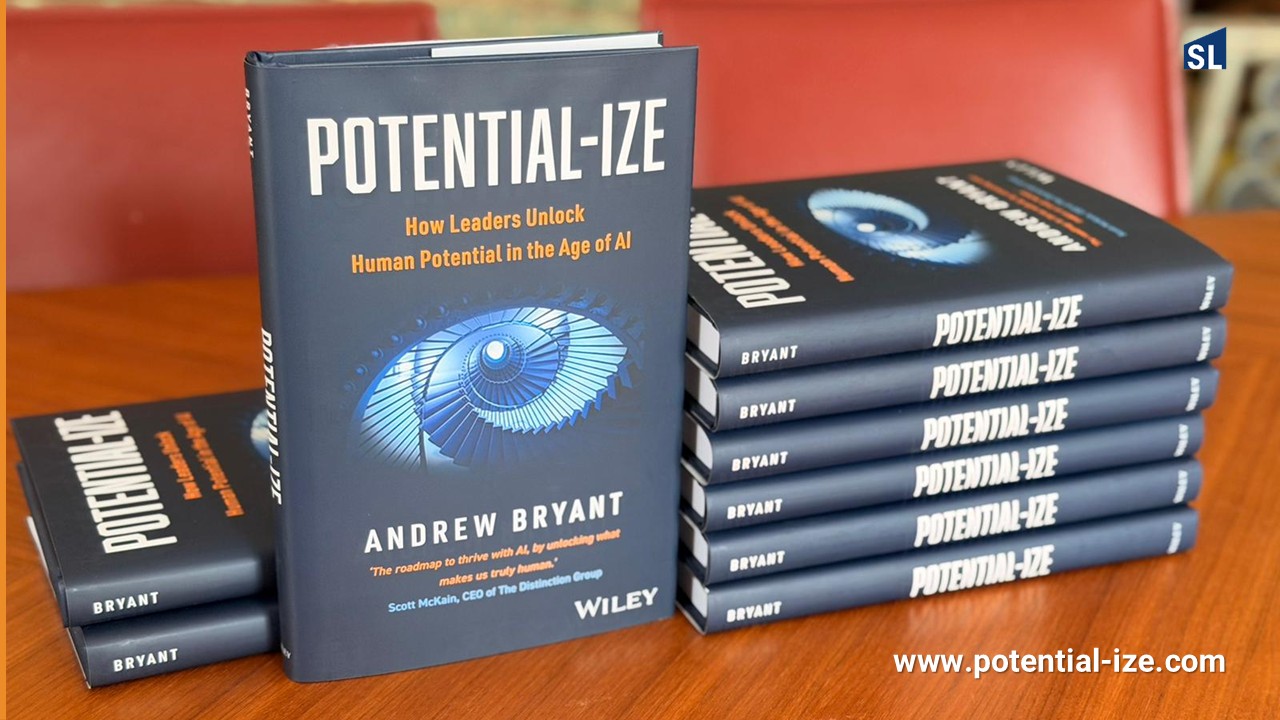
In my latest book, POTENTIAL-IZE: How Leaders Unlock Human Potential in the Age of AI (Wiley, 2026), I build on this foundation by arguing that potential is a verb, not a noun. It is not something you have or attract. It is something you actively do. The IGNITE Framework at the heart of the book maps out exactly how leaders can remove the internal blocks that prevent their people and themselves from doing it.
There are three families of self-leadership strategies that researchers (Manz and Neck, 2004; Neck and Houghton, 2006) have identified and validated across decades of study. You are probably already using some of them. The question is whether you are using them with enough intention and skill to produce the results you want.
The three families are:
- Constructive thought strategies
- Behavior-focused strategies
- Natural rewards strategies
Together, they form a complete system for closing the gap between who you are today and who you are capable of becoming.
Your Beliefs Are Running the Show (Whether You Know It or Not)
Before we talk about what to do, we need to talk about what is happening under the surface.
In my experience working with leaders across Asia, Europe, the Americas, and beyond, the most consistent hidden obstacle to human potential is the usually unconscious belief that we are not good enough. It shows up in different costumes: perfectionism, procrastination, self-sabotage, an inability to receive praise, and a compulsive need to please others. But at the core, it is the same limiting belief.
As we wrote in Self-Leadership, a belief is an assumed truth that can come from our own experiences or from our blind acceptance of what people tell us. Our values, beliefs, and identity function as a mental map. We are more than our beliefs, and yet our beliefs can drive our thinking and behaviors without us even noticing.
Here is what matters most: a belief is not a fact. It is a frame that governs your experience of the world and your interaction with it. And if a belief does not serve you, it can be challenged and changed. The formula is simple: it is not this, it is that.
NOT "I'm a failure." → "I had a learning experience."
NOT "Change is tough." → "I changed in the wrong direction."
NOT "I'm worthless." → "I've been doing a great job hiding my value."
When you find the core belief that is driving an unwanted pattern, you can ask yourself: is believing this serving me? If not, what would I need to believe to get the result I want?
Once you have identified that new and resourceful belief, you can turn it into a mantra and start taking action from that frame of mind.
The Power of Obstacles: Why Self-Leaders Think Differently About Barriers
One of the most liberating insights in both self-leadership and Oettingen's WOOP research is this: the obstacle is not the enemy of the goal. The obstacle is the information you need to achieve the goal.
The obstacle that matters most is never the external one. It is the internal one. It is the resistance, the old script, the habitual avoidance that lives inside you. That is why WOOP specifically directs your attention inward. Not to what the market is doing or what your competition is planning, but to what is happening in your own thinking and behavior that stands between where you are and where you intend to be.
Elite athletes do not simply visualize the finish line. They visualize the race. They mentally rehearse the moment when their legs start to burn, when the competitor surges ahead, when the crowd goes quiet. They prepare their response to adversity so that when it arrives, it is not a surprise but a planned event.
As someone who spent 17 years working with elite athletes, I watched this process transform performance again and again. The ones who broke through were not the ones who most believed they would win. They were the ones who had prepared most thoroughly for the possibility that they might struggle.
Self-leadership invites you to bring that same strategic realism to every area of your life.
The Coach in Your Head: Mastering Self-Talk
Every one of us has an inner dialogue running constantly. The question is not whether you talk to yourself. The question is whether you are being a wise coach or a harsh critic.
In Self-Leadership, we wrote about what psychologists call positive self-parenting. Self-parenting is the internal conversation conducted between our inner child and our inner parent. If our relationship with our parents was positive, our internal conversations tend to be positive. If it was not, we can find ourselves unconsciously running a program of self-criticism that would astonish us if a friend spoke to us the same way.
You would not accept a friend who constantly told you that you were not good enough. Why accept that voice inside your own head?
In 2000, I lost my business, my assets, and a significant amount of money. My inner critic ran wild for several weeks. What pulled me back was a deliberate decision to self-coach. I told myself I had skills, knowledge, and experience. I told myself there were people who needed what I offered and would pay for it. I made call after call, faced rejection after rejection, and kept talking myself through it. Eventually, one company said yes. Then another. The self-talk was not wishful thinking. It was constructive realism keeping me in motion.
The self-leader learns to notice the inner dialogue and ask a simple question: what do I need to say to myself right now to get the result I want? Then they say exactly that, in a tone that puts them in the state of mind to take action.
Ritual as a Self-Leadership Tool
Here is something interesting that has emerged from research in performance psychology. Ritualized pre-performance routines, the consistent and repeatable actions that athletes, musicians, and surgeons use before high-stakes moments, have been shown to measurably reduce anxiety and improve performance accuracy.
This is not magic. It is a self-regulation technology. The ritual functions as a commitment device. It signals to your nervous system that it is time to shift into a focused, resourceful state. It narrows attention to what matters and quiets the noise of self-doubt.
In Self-Leadership, we described cue management as one of the core behavioral strategies: using reminders and attention focusers to identify important moments and benchmarks in tasks.
What Is the Main Benefit of Using Reminders and Attention Focusers in Self-Leadership?
The main benefit is that they align your behavior with your intentions before willpower has to get involved. A reminder or attention-focuser, a sticky note, a specific object on your desk, or a pre-task ritual interrupts autopilot at exactly the moment when a good decision is easiest to skip. Instead of relying on motivation, which fluctuates, you are relying on environmental design, which does not. This is why cue management outperforms sheer determination over the long run: it reduces the number of moments where you have to consciously choose the harder, better path, because the cue has already pointed you there.
A well-designed ritual is an advanced form of cue management. It does not need to be elaborate. It needs to be consistent. Something you do before every important piece of work that marks the transition from ordinary to intentional.
Three More Behavior-Focused Strategies Worth Knowing
Cue management is one of several behavior-focused strategies Manz and Neck identified. The others are just as practical:
Self-observation is deliberately paying attention to specific aspects of your own behavior, when it happens, how often, and what triggers it, so you have the awareness needed to change it. You cannot redirect a pattern you have not first noticed.
Self-goal setting is choosing your own specific, personally meaningful objectives rather than only working toward goals imposed by someone else. Self-set goals consistently generate stronger commitment than goals handed down without input.
Self-reward is deliberately giving yourself a tangible or intangible reward after completing a valued task or hitting a milestone. Waiting for external recognition puts your motivation in someone else's hands. Self-reward keeps it in yours.
Alongside these sit the natural reward strategies: reshaping how a task itself feels so the motivation comes from the activity, not only from what follows it.
Self-Leadership in the Age of AI
We are living through one of the most significant disruptions to human work in history. In POTENTIAL-IZE, I call it the efficiency paradox: the very tools that make us more productive are simultaneously creating a leadership vacuum. When AI handles more of the cognitive and procedural work, what remains is irreducibly human potential: the capacity to direct your own thinking and emotion, the ability to choose your response to adversity, the willingness to pursue meaningful goals with sustained commitment, and the skill of connecting authentically with others.
These are not soft skills. They are the hardcore of human performance in the 21st century. They are, in short, the skills of self-leadership.
No AI can do your WOOP exercise for you. No algorithm can examine your limiting beliefs. No tool can decide whether you will be the author of your life or an actor playing out someone else's script. The IGNITE Framework in the new book maps the specific path from self-awareness through to leading others in the AI era. But every step in that framework begins in the same place: with you, leading yourself.
Potential is a verb, not a noun. It is something you do, not something you have. And the doing of it starts with leading yourself.
Five Daily Self-Leadership Practices That Produce Real Results
The following practices are drawn from the three families of self-leadership strategy and are consistent with the evidence on goal pursuit, mental rehearsal, and behavior change. They are practical, time-efficient, and designed to be used as a daily system rather than as occasional interventions.
Practice 1: Morning Intention Setting (10 minutes)
Before you engage with email, news, or other people's agendas, take ten minutes to set your own. This is WOOP in action. Name one clear, realistic wish for the day. Spend a moment vividly imagining the best outcome of achieving it. Then identify the most likely internal obstacle you will face. Finally, write your if-then plan: if that obstacle appears, then I will do this specific thing. This sequence activates your goal-pursuit system before the day's noise has a chance to distract it.
Practice 2: The Belief Audit (5 minutes, weekly)
Once a week, identify a belief that may be limiting your results. As we explored in Self-Leadership, ask: what belief is currently driving this pattern? Is it serving me? Then ask: what would I need to believe to achieve what I want?
Write down one piece of evidence from your own experience that supports the new belief. When repeated consistently, this practice begins to genuinely update the operating assumptions underlying your behavior, not just your conscious thinking.
Practice 3: Process Visualization (5 minutes, before key tasks)
Before any important meeting, presentation, conversation, or creative session, spend five minutes in process visualization. Do not only see yourself succeeding. See yourself navigating the hard moment: the question you cannot immediately answer, the silence that feels uncomfortable, the moment your confidence dips. See yourself responding with calm competence. Your physiology rehearses what your mind vividly imagines. Give it the right rehearsal. This is not the passive fantasy that research shows can reduce effort. It is the active mental preparation that distinguishes elite performers from everyone else.
Practice 4: The Self-Coaching Check-In (2 minutes, mid-afternoon)
Set an alarm for mid-afternoon. When it triggers, ask yourself three questions: What is working today? What am I resisting? What is the one thing that would make the biggest difference in the next two hours? This brief pause interrupts unconscious autopilot and restores intentional self-direction. It is the self-leader's equivalent of a compass check on a long walk. Over time, it builds the habit of self-observation that is the foundation of every other self-leadership strategy.
Practice 5: The Evening Integration (5 minutes)
Before the day ends, capture three things: one thing you did well and why it worked, one thing you would do differently and what you learned from it, and one commitment for tomorrow. This is not a gratitude journal, though gratitude may be part of it. It is a performance review conducted with the rigor of a professional and the compassion of a good coach. As we wrote in Self-Leadership, self-leaders regularly observe their actions, control their thoughts, and measure their achievements against their own benchmarks. Progress is not accidental. It is observed, acknowledged, and built upon.
In Summary
The evidence is clear. The path is well lit. What the popular manifestation industry has been selling as a secret is not a secret at all. It is self-leadership, practiced daily with honesty, intention, and the courage to examine what is actually in the way.
If these ideas resonate with you, I explore them in depth in both Self-Leadership: How to Become a More Successful, Efficient, and Effective Leader from the Inside Out (McGraw-Hill, 2012) and in POTENTIAL-IZE: How Leaders Unlock Human Potential in the Age of AI (Wiley, March 2026).
Or perhaps you would like to book me to give a speech for your organization.
The next step belongs to you. Make it a good one.
About the Author: Andrew Bryant is widely regarded as a leading authority on self-leadership. He is the founder and CEO of Self Leadership International, a keynote speaker, executive coach, and author of five books, most recently POTENTIAL-IZE: How Leaders Unlock Human Potential in the Age of AI (Wiley, 2026). Andrew Bryant is the practitioner behind the definition of self-leadership in Self Leadership (McGraw-Hill, 2012), a definition cited in peer-reviewed research and used in learning resources published by Penn State and NHS Education for Scotland. Based in Sintra, Portugal, after 17 years in Asia, Andrew holds faculty associations with MIT and Singapore Management University and works across 40+ countries. Learn more at www.selfleadership.com.
Frequently Asked Questions
What is the main benefit of using reminders and attention focusers in self-leadership? The main benefit is that they align your behavior with your intentions before willpower has to get involved. A reminder or cue interrupts autopilot at the exact moment a good decision is easiest to skip, so you are relying on environmental design rather than fluctuating motivation. This is a core behavior-focused self-leadership strategy identified by Manz and Neck.
What is self-observation in self-leadership? Self-observation is the practice of deliberately paying attention to specific aspects of your own behavior, when it happens, how often, and what triggers it, in order to gain the awareness needed to change it. Manz and Neck identify it as a foundational behavior-focused strategy: you cannot intentionally redirect a pattern you have not first noticed.
What is self-reward as a self-leadership strategy? Self-reward is deliberately giving yourself a tangible or intangible reward after completing a valued task or reaching a milestone, to reinforce and sustain the behavior. Unlike waiting for external recognition, self-reward puts the reinforcement under your own control, which makes it available even when nobody else is watching.
What is self-goal setting in self-leadership? Self-goal setting is choosing your own specific, personally meaningful objectives and standards, rather than working only toward goals imposed by someone else. It is one of the behavior-focused strategies in the Manz and Neck model, and it matters because self-set goals tend to generate stronger commitment than goals handed down without input.
What are natural reward strategies in self-leadership? Natural reward strategies involve reshaping how a task itself feels, building in elements that make it inherently enjoyable or meaningful, so the motivation comes from the activity itself rather than only from an incentive that follows it. Examples include focusing on the parts of a task you find genuinely engaging, or reframing a routine task around its larger purpose.
What is self-leadership? Self-leadership is the practice of intentionally influencing your own thinking, feelings, and behavior to achieve your objectives. It emerges from self-awareness, which leads to greater self-responsibility and behavioral flexibility, increasing your ability to reach your goals.
Does manifestation actually work, according to science? Pure positive visualization on its own has been shown to reduce the energy people put into pursuing a goal, because the brain "tastes" the reward in imagination and relaxes its drive to achieve it in reality. What the research does support is a structured approach: naming a wish, imagining the outcome, identifying the real internal obstacle, and building an if-then plan. That four-step method, known as WOOP, has produced measurable results across more than 20 field studies. In short, intention and visualization work when they are paired with honest examination of what is actually in the way, which is the core of self-leadership.
What is the WOOP method? WOOP stands for Wish, Outcome, Obstacle, and Plan. Developed by NYU psychologist Gabriele Oettingen, it involves naming a realistic and meaningful wish, vividly imagining the best outcome, identifying the most significant internal obstacle standing in the way, and creating a specific if-then plan for when that obstacle appears.
What is an example of self-leadership in practice? A simple example is morning intention setting: before checking email or news, spending ten minutes naming one clear goal for the day, imagining achieving it, identifying the internal obstacle most likely to derail it, and deciding in advance exactly how you will respond if that obstacle shows up.
Turn Insight Into ActionReading about leadership can change what you know.Self-leadership changes what you do.Develop your leadership effectiveness → Explore Self-leadership Discover your leadership strengths & gaps → Choose an Executive Coach Unlock the potential of your team → Workshops & Masterclasses Ignite your event or conference → Book Andrew Bryant as your Leadership Speaker "Prescription without diagnosis is malpractice" |