
The Surprising Influence of Self-Leadership on Leadership Effectiveness
Jan 18, 2026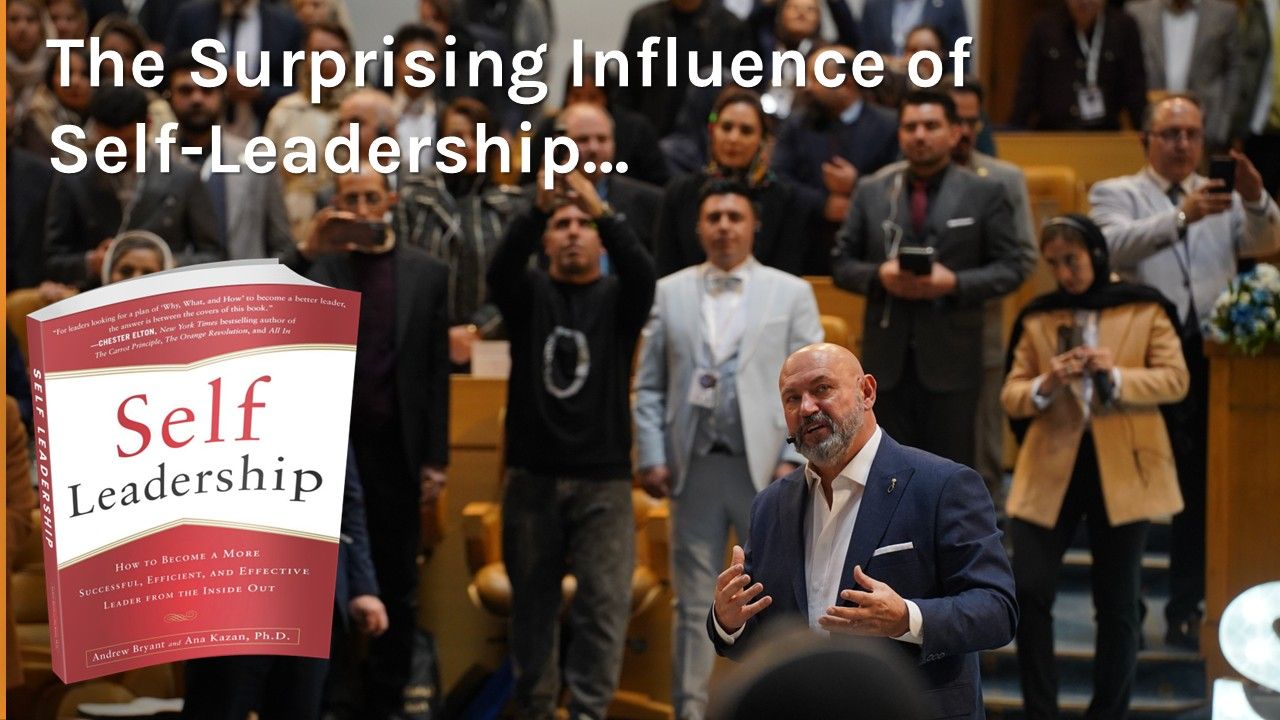
Last updated: August 19, 2026
When leaders, CHROs, or learning development professionals talk about leadership effectiveness, their focus is typically on the external:
- Influence
- Engagement
- Performance
- Culture.
Yet one of the most powerful drivers of effective leadership is often overlooked...Self-leadership.
Not as a personality trait.
Not as positive thinking.
But as a disciplined, evidence-based practice that shapes how leaders think, decide, and behave under pressure.
Why leadership effectiveness starts on the inside
In Self-Leadership: How to Become a More Successful, Efficient, and Effective Leader from the Inside Out (Bryant & Kazan, 2012), we define self-leadership as the intentional influence over your own thinking, feeling, and behavior in pursuit of meaningful goals.
That definition challenges a common assumption.
Before you can lead others effectively, you must consistently lead yourself.
Leadership effectiveness is not created by charisma or position. It is created by internal alignment. When thoughts, emotions, decisions, and actions are congruent, leadership becomes predictable, trustworthy, and human.
This is why self-leadership forms the foundation of every other leadership capability, from communication to decision making to influence.
You can explore this further in What Is Self-Leadership?.
What research tells us about self-leadership and effectiveness
Academic research on self-leadership has grown steadily over the past three decades, and the findings are remarkably consistent.
A 2022 meta-analysis pooling 57 effect sizes (Knotts et al.) found self-leadership correlates with individual performance at ρ = .38, a strong effect by organizational psychology standards. That's consistent with the broader pattern in the literature: self-leadership is positively associated with leadership effectiveness, job performance, work engagement, resilience, and psychological well-being, because leaders who practice it learn to regulate themselves before attempting to regulate others.
The broader literature on self-leadership consistently highlights its role in complex, uncertain, and fast-changing environments. Leaders with strong self-leadership show higher levels of self-regulation, autonomous motivation, adaptability, and learning orientation. These capabilities are particularly important in modern organizations where control is limited and expectations are high.
In practical terms, leaders with strong self-leadership demonstrate:
-
Better decision-making under pressure
-
Greater emotional stability during disruption
-
Higher quality communication
-
Increased openness to feedback
-
Consistent role modeling of accountability
This aligns directly with what I see in my work with executives and senior leaders across industries. Leadership effectiveness is rarely about knowing more. It is about managing yourself better.
Why followers respond differently to self-led leaders
People do not experience leadership through frameworks or strategy documents. They experience it through behavior.
Leaders who lack self-leadership often appear reactive, inconsistent, or overly controlling. Stress leaks into the system. Small issues escalate. Trust erodes quietly.
Self-led leaders create a different experience.
- They bring steadiness into uncertainty
- They respond rather than react
- They separate the signal from the noise
This is why self-leadership quietly builds trust. Followers may not be able to name it, but they feel it in how decisions are made, pressure is handled, and mistakes are handled. There's a neuroscience basis for this, not just an observation: reading other people and understanding your own internal state share overlapping brain circuitry, which is why a leader's self-regulation is something people around them can genuinely sense, not just infer.
Self-leadership as a multiplier of leadership impact
One of the most underestimated aspects of self-leadership is its ripple effect.
Leaders who lead themselves well create permission for others to do the same.
- They model responsibility without control
- They support autonomy without abandonment
- They reinforce accountability without fear
In my experience working with leadership teams, this doesn't stop at the individual level either. It contributes to healthier leadership cultures by reducing dependency on authority and increasing ownership throughout the organization.
This is why self-leadership is not only personal development. It is organizational leverage.
If you are responsible for developing leaders at scale, self-leadership must sit at the core of leadership development programs, not at the periphery.
You can explore the self-leadership approach to leadership development here, or bring me in as a self-leadership speaker to open the conversation with your leadership team directly.
Leadership effectiveness in the AI era
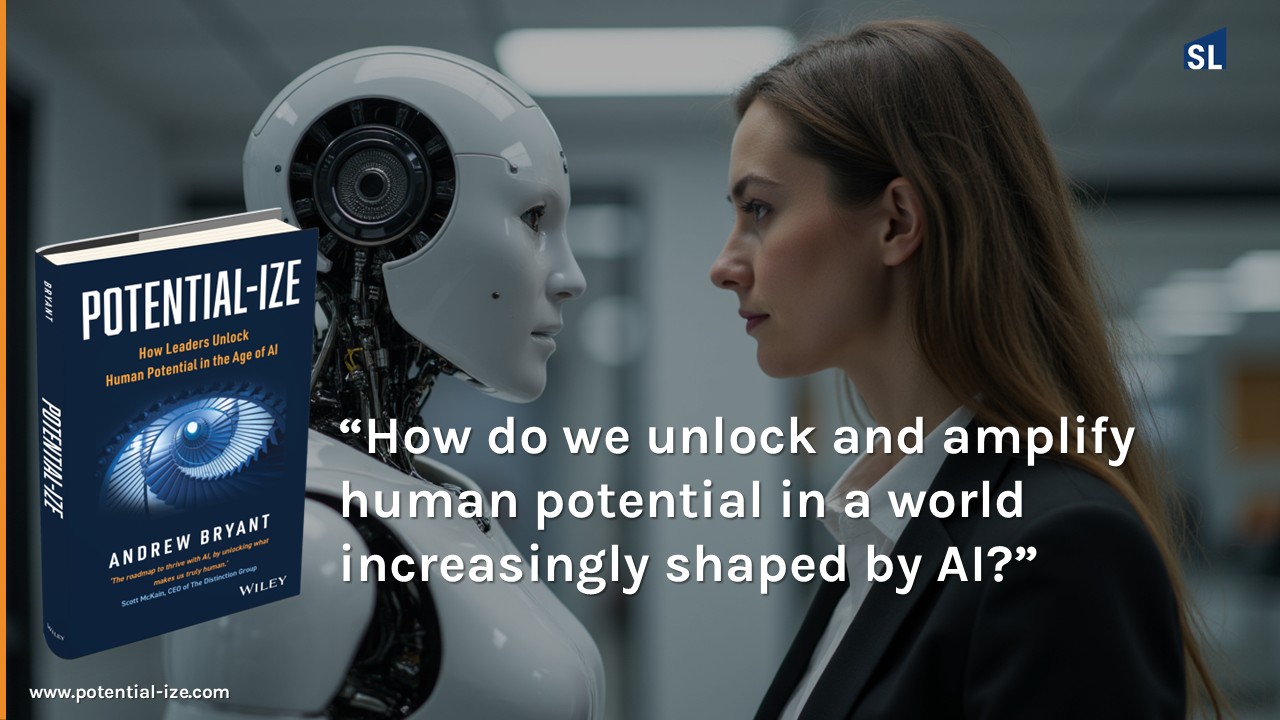
As artificial intelligence accelerates capability, leadership effectiveness becomes less about information and more about judgment.
AI can assist with analysis.
It cannot replace self-awareness.
AI can generate options.
It cannot regulate emotion.
AI can increase speed.
It cannot create meaning.
In this environment, leaders are judged less by what they know and more by how they show up. Self-leadership is what allows leaders to remain grounded, ethical, and human while everything else accelerates.
This is a central theme in my work on leadership in the AI era and is further explored in my latest book, POTENTIAL-IZE: How Leaders Unlock Human Potential in the Age of AI.
From reaction to choice
At its core, self-leadership is about reclaiming choice.
Instead of being driven by habit, pressure, or expectation, the self-led leader asks:
- How should I be thinking right now?
- What emotion will best serve this moment?
- What action aligns with who I want to be as a leader?
This internal discipline is what transforms leadership from performance into presence.
Leadership effectiveness does not begin with influence over others.
It begins with influence over yourself.
A Short Reflective Exercise for Leaders
Take five quiet minutes and reflect honestly on the questions below. Do not rush to solutions. Awareness comes first.
-
In the past week, when did I react rather than choose my response?
-
What emotion most often drives my leadership decisions under pressure?
-
Where am I expecting others to show discipline when I am not consistently practicing myself?
-
What is one small self-leadership practice I could apply daily to increase my leadership effectiveness?
Write down your answers.
Self-leadership does not improve through insight alone.
It improves through conscious, daily practice.
Frequently Asked Questions
What does research say about self-leadership and leadership effectiveness?
A 2022 meta-analysis pooling 57 effect sizes (Knotts et al.) found self-leadership correlates with individual performance at ρ = .38, a strong effect by organizational psychology standards. Leaders who practice self-leadership strategies tend to show higher work engagement, resilience, and psychological well-being, because they regulate themselves before attempting to regulate others.
What are self-leadership strategies, in practice?
Better decision-making under pressure, greater emotional stability during disruption, higher-quality communication, increased openness to feedback, and consistent role modeling of accountability. These show up as behaviors, not personality traits, which is what makes them learnable.
Why do followers respond differently to self-led leaders?
People experience leadership through behavior, not frameworks. A leader without self-leadership tends to appear reactive, inconsistent, or overly controlling under stress. A self-led leader brings steadiness into uncertainty, which followers register even if they can't name why they trust that person more. There's a neuroscience basis for this: reading other people and understanding your own state share overlapping brain circuitry, so a leader's internal regulation is genuinely legible to the people around them.
Does self-leadership matter more or less in the age of AI?
More. AI can assist with analysis and generate options, but it cannot replace self-awareness, regulate emotion, or create meaning. As AI absorbs more routine cognitive work, leaders are judged less by what they know and more by how they show up, which is exactly what self-leadership governs.
Andrew Bryant is a global authority on self-leadership and a self-leadership speaker, the founder of Self Leadership International. His research on autonomy, responsibility, and intentionally influencing thinking, feelings, and actions has been cited in over 200 academic papers. His latest book, POTENTIAL-IZE: How Leaders Unlock Human Potential in the Age of AI (Wiley, 2026), provides frameworks for systematic human development in the AI age. For executive coaching inquiries, visit selfleadership.com/executive-coaching.
Turn Insight Into ActionReading about leadership can change what you know.Self-leadership changes what you do.Develop your leadership effectiveness → Explore Self-leadership Discover your leadership strengths & gaps → Choose an Executive Coach Unlock the potential of your team → Workshops & Masterclasses Ignite your event or conference → Book Andrew Bryant as your Leadership Speaker "Prescription without diagnosis is malpractice" |